Part 2 of 3 Series: What Paper Knows
Part two of three
Chill and Quill Making & Meaning
The Algorithm Can't Feel the Paper Give
On handmaking in an age of AI, and why the process is the whole point
There is a moment, maybe thirty seconds into rolling a quilling strip, where the paper stops resisting and starts cooperating. The grain loosens. The coil begins to feel inevitable rather than forced. I have never been able to describe this to a non-quilter in a way that fully lands. And I have been thinking lately about the fact that no AI ever will experience it either.
This is not a complaint about AI. I use it, I teach with it, I find it genuinely useful in parts of my work. But there is a conversation happening right now, in craft communities and educational spaces and anywhere people make things by hand, about what gets lost when process becomes output, when the point of a thing is understood only as its end result. I want to stay in that conversation, because I think it matters, and because quilling has given me a specific and useful way to think about it.
What AI can do, and what it cannot
An AI can generate an image of a quilled hummingbird. It can do this in seconds, at a resolution I couldn't match, with colors I might not have thought to combine. If the goal is a picture of a hummingbird, the AI wins on efficiency by a significant margin.
But the AI did not sit with the question of whether a tight coil could become a convincing feather. It did not decide, through feel rather than calculation, when to ease tension on the strip. It did not experience the small failure of a coil that went too loose, or the adjustment that followed, or the understanding that only came from making the mistake. It produced an output. It did not do the work.
This distinction matters more than it might seem, because the work is not just instrumental. For many makers, the process is the entire point. The output is evidence that the process happened. It is not the same as the process.
- The appearance of the finished object
- Pattern generation and variation
- Structural planning and composition
- Color relationships and balance
- Replication at scale and speed
- The physical feedback loop of making
- The knowledge that lives in the hands
- The meditative quality of slow, repetitive work
- The relationship between maker and material
- The particular meaning of having made it yourself
The math book, unexpectedly, has something to say about this
In the first post in this series, I wrote about Geometric Folding Algorithms, a textbook on the mathematics of paper folding. One of its central findings is that paper's behavior is deeply tied to its physical properties: the grain direction, the thickness, the way fibers align when you roll rather than crease. These properties are not abstractions. They exist in the material itself, and they change what is possible.
The book's proofs about what paper can and cannot do are proofs about physical paper, about a substance with weight and resistance and memory. A digital simulation of paper can model these properties approximately, but it cannot be them. The mathematics of folding is, at its root, a mathematics of physical matter, and physical matter only exists in one place.
This turns out to be a surprisingly useful frame for thinking about handmaking in general. When you make something by hand, you are not just producing a shape. You are in a conversation with a material that has its own agenda, its own constraints, its own way of cooperating or refusing. The maker learns from that conversation in a way that cannot be fully transferred through observation or instruction. It has to be experienced directly.
The mathematics of paper folding is a mathematics of physical properties. Those properties only exist in the material. The knowledge of how to work with them only exists in the hands that have.
Tacit knowledge and why it cannot be uploaded
There is a concept in the study of expertise called tacit knowledge, a term coined by philosopher Michael Polanyi in the 1960s. Tacit knowledge is the knowledge you have that you cannot fully articulate. The experienced quilter who adjusts her tension without thinking about it. The baker who knows when bread dough is ready by how it feels. The surgeon who senses, before she can name why, that something is off.
Polanyi's phrase for this was: "we know more than we can tell." And his argument was that this kind of knowledge is not a lesser or incomplete version of explicit knowledge. It is a different kind entirely, built through embodied experience, and it cannot be fully captured in language or code or any external representation, no matter how sophisticated.
This is precisely what AI cannot access. Not because AI is not powerful or not intelligent in the ways it is intelligent, but because tacit knowledge is not information. It is the residue of having done something with your body, repeatedly, in contact with a material that pushed back. You cannot download it. You have to earn it the slow way.
The meditative argument is also a practical argument
I want to make a case that is sometimes dismissed as soft: the meditative quality of slow handwork is not incidental to its value. It is central to it.
There is real research on this. Repetitive hand movements, the kind involved in quilling, knitting, weaving, and similar crafts, activate the parasympathetic nervous system. They reduce cortisol. They produce a state that researchers have compared to meditation, where the mind is occupied just enough to quiet the noise but not so occupied that it cannot process. This is not a side effect of making things. For many practitioners it is the primary reason they make things. The hummingbird at the end is proof that it happened.
AI can produce a hummingbird in seconds. It cannot give you the thirty minutes of regulated nervous system that went into making one by hand. Those are not the same product, even if they look the same on the wall.
What this means for the question of value
I have a PhD in educational policy, and the conversation I have been part of for years is about what we value, how we measure it, and what gets lost in the gap between the two. The handmade object is a version of this problem. If value is defined as output, then AI wins. If value includes process, presence, embodiment, and the particular kind of knowledge that comes from making something difficult with your hands, then the calculation is completely different.
I do not think the answer is to reject AI or to treat handmaking as inherently superior. I think the answer is to be more precise about what we are actually after. When I quill, I am not trying to produce the most efficient hummingbird. I am trying to be the kind of person who can sit with difficulty long enough to make something beautiful from it. That is a different project entirely, and it requires the slow way.
The question isn't whether AI can make what you make. It can approximate the output. The question is what you are actually making it for, and whether the process is part of the answer. For most makers, it is.
A word about AI as a tool, not a replacement
I want to be clear that I am not arguing against using AI in creative practice. I use it to plan compositions, explore color relationships, research techniques, and draft patterns I then execute by hand. Used this way, it is genuinely useful, the same way a calculator is useful to someone who already understands mathematics.
The issue is the conflation of the tool with the practice. A calculator does not understand mathematics. An AI image generator does not understand making. The person who uses the tool and has the embodied knowledge is still doing something qualitatively different from the tool itself. That distinction is worth protecting, not defensively, but clearly.
The paper gives under my fingers. The coil finds its shape through a negotiation between my pressure and its grain. That conversation is happening in the physical world, between a body and a material, and no model trained on images of the results has access to it. That is not a limitation of AI. It is a description of what handmaking is.
Why I Roll Paper Instead of Doomscrolling (And Why You Should Too)
There is a particular kind of tired that has nothing to do with sleep. It is the tired that comes from answering seventeen emails before 9am, from context-switching between twelve browser tabs, from a brain that never fully gets to exhale. If you know that tired, this post is for you. I found quilling by accident, the way most good things happen. I was looking for something my hands could do while my brain stood down. What I found was a practice that turned out to be less about paper and more about presence.
What Even Is Quilling?
If you are new here, welcome. Paper quilling (also called paper filigree) is the art of rolling, shaping, and arranging thin strips of paper into designs. That is it. That is the whole thing.
A strip of paper. A slotted tool. Your fingers. Time.
You roll the paper around the tool, let it relax into a loose coil, then pinch it into a shape: a teardrop, a marquise, a tight circle, a loose scroll. You arrange those shapes into flowers, mandalas, letters, portraits, abstract patterns. The results can be breathtakingly intricate, but the entry point is genuinely simple. If you can roll paper around a pencil, you can quill.
Starter supplies are minimal:
Quilling paper strips (3mm is great for beginners)
A slotted quilling tool (or a toothpick in a pinch)
Glue (a fine-tip bottle makes life easier)
A quilling board or corkboard to hold your shapes while they dry
That is really all you need to begin.
The Part Nobody Talks About
Here is what the craft tutorials do not tell you: the making is almost beside the point.
When I sit down to quill, something shifts within the first five minutes. My breathing slows. My shoulders drop from wherever they had been living up by my ears. The mental chatter that follows me everywhere gets quieter, not because I forced it to, but because my hands gave my brain something small and beautiful to pay attention to.
Quilling is slow by design. You cannot rush a coil. The paper does not care about your deadline or your inbox. It will only curl at the pace it curls, and your job is simply to stay with it.
That slowness, which might sound like a flaw, is the whole gift.
We live in a culture that treats speed as virtue. Productivity is a personality trait. Rest has to be earned. Against all of that, sitting down to hand-roll paper strips into tiny flowers feels almost radical. It is a quiet insistence that some things are worth doing slowly, that beauty does not have to be efficient, that your hands deserve to make something just because it is lovely.
Behind the Quill: What a Session Actually Looks Like
My quilling practice is not precious or elaborate. I keep a small tray on my desk with my strips, my tools, and whatever project I am currently working on. When I need a reset, I do not light seventeen candles or put on a specific playlist. I just sit down and start rolling.
Some days I work on a commission piece with intention and focus. Some days I just make coils I do not have a plan for yet. Both are valid. Both work.
I keep my sessions relatively short, usually 20 to 45 minutes, because that is about how long the meditative quality holds before it tips into work. The goal is never productivity. The goal is the quality of those 20 to 45 minutes: the slowing down, the noticing, the small satisfaction of a shape that came out just right.
I call it chilling and quilling for a reason.
A First Project: The Simple Daisy
If you want to try this right now, here is the simplest version of an entry point:
Take five strips of the same color. Roll each one around your tool and let it relax to about the size of a dime.
Pinch each coil on one side to form a teardrop shape.
Arrange your five teardrops in a circle, points facing inward, and glue them down.
Roll a tight circle in a contrasting color for the center. Glue it over the points.
You just made a daisy. It took maybe ten minutes. Your brain was somewhere beautiful for those ten minutes.
That is quilling. That is also, I would argue, a form of self-care that does not require a subscription, a wellness app, or anything you do not already mostly have at hand.
The Slow Living Connection
Slow living is not about doing less. It is about doing things fully. It is about choosing presence over efficiency when presence is what actually feeds you.
Quilling fits that philosophy the way few hobbies do. It asks for your attention in exchange for something tangible and beautiful. It returns you to your body. It connects you to a craft tradition that is centuries old. And it produces objects you can hold, gift, hang on a wall, or just look at and remember that your hands made that.
In a life that can feel increasingly abstract, screen-mediated, and disembodied, there is something deeply nourishing about that.
If you are curious about starting, I have supplies, tutorials, and more over at allmyquills.com. And if you just needed to read something today that gave you permission to slow down, consider this it.
Roll something beautiful. Take your time.
What does your version of a creative reset look like? I would love to hear about it in the comments.
Part 1 of 3 in the Series: What Paper Knows
Part one of three · What Paper Knows
Chill and Quill Books & Making
What a 500-Page Math Book Taught Me About My Quilling Strips
Or: the surprisingly moving experience of reading academic proofs and recognizing your own hands in them
I did not expect to pick up a dense computer science textbook called Geometric Folding Algorithms and feel, somewhere around chapter three, like someone had quietly written a love letter to every paper crafter who ever lived. But what surprised me more was realizing this wasn't just about folding paper. It was about everything I had been told to keep separate.
If you make anything with your hands (quilling, origami, sewing, woodworking), I suspect this book has a secret love letter for you, too.
Let me start where the split began: seventeen-year-old me, being told I couldn't major in art. My mother had always supported my art. She just didn't want me to go broke, and that fear made sense. She told me it wasn't practical, and I believed her in the way that first-generation college students tend to believe the people steering them toward something safer. Art was quietly set aside. I didn't immediately land on mathematics. But math is where I graduated, and by the time I did, I had accepted the split as simply the way things were. It took me twenty years and a book about origami to start pulling that apart.
The irony I live with now, as someone with a PhD in Curriculum, Teaching and Educational policy who studies exactly these kinds of choices, is that the split was never real. The line we drew between art and math, between practical and beautiful, between useful and meaningful, was a decision someone made. It was not a description of how knowledge actually works. History makes this plain.
Consider three examples I keep in my back pocket:
The fiction held anyway. It shaped my education, my career choices, and the apologetic way I describe my quilling to people who don't make things. All of that, it turns out, was preparation for reading a textbook about paper.
The book is by Erik Demaine and Joseph O'Rourke, two mathematicians who study what paper can and cannot do. Linkages. Origami. Polyhedra. Hundreds of theorems about folding and unfolding. It is not, on its surface, a crafting book. There is not a single quilling strip anywhere in its 486 pages.
And yet.
We are both asking the same first question
Before I start any quilling piece, I hold the idea in my mind and ask: can I actually make this? Can a tight coil become a convincing rose petal, or a strip of paper become a hummingbird wing?
This is the central question of the entire book. The authors call it a "foldability question." Given this shape, this crease pattern, this polygon, can it be folded into what you're imagining? Sometimes the answer is yes, and they give you the algorithm. Sometimes the answer is "we don't know yet," and they box it up as an open problem. Sometimes the answer is a surprising, counterintuitive no.
What struck me is that I've been doing this my whole quilling life, reaching for an intuition that mathematicians have been formalizing since the 1990s. We are working on the same problem from different ends of the same strip of paper. My math degree and my quilling practice were never in different rooms. I just wasn't able to see it that way.
"Foldability questions ask: can this type of object fold to some general class of folded states?" The authors spend 400 pages proving that the answer is deeply, surprisingly complicated.
Curved creases are quilling's native language
If foldability gave me language for the questions I've always asked, curved creases gave me language for the way my hands already move.
Chapter 20 covers "rigid origami and curved creases." It describes how paper naturally wants to form curves when you fold along a curved line rather than a straight one, producing sculptural, three-dimensional forms that straight-line origami simply cannot achieve. Every quilling strip I roll takes on a curve because of the paper's grain and the pressure of my fingers; the teardrop, the marquise, the loose scroll are all expressions of what paper does when you encourage it to follow a curve. The chapter gave me the mathematical vocabulary for something I had been doing by feel for years.
The book also mentions artist David Huffman, who spent decades making sculptural pieces using curved folds, treating the mathematics of paper as an artistic medium. He didn't publish most of his work. He just made things, quietly, because he found it beautiful. He was doing what seventeen-year-old me wanted to do: holding math and art in both hands at once, refusing to choose.
My process is structural, whether I call it that or not
Chapter 16 describes a piece of software called TreeMaker, built by origami master Robert Lang. You sketch the "tree" of the figure you want: here are the antlers, here are the legs, here is how long each part needs to be. The algorithm computes the exact crease pattern to produce all those parts from one square sheet of paper.
When I plan a complex quilling piece, I do something structurally identical. I sketch the composition, mark where the focal coils go, trace the flow lines, decide which shapes support which. I'm building a tree. My math degree lives in this: the spatial reasoning, the habit of asking "what are the constraints?" before I make a single move. It just happens to produce something beautiful rather than a proof, which, by the way, a proof also is.
Chapter 4 deepened this further. It is about when a structure holds its shape and when it collapses. A triangle is rigid. A square is floppy. Whether a structure resists movement depends on how its pieces are connected and how tension is distributed across the whole. A quilled coil, before it's glued, is floppy; it can become anything. The moment you fix that end, it becomes rigid. You've made a structural decision. The paper remembers it.
There is also a concept in the book called a tensegrity: think of a sculpture where rods float in space, held only by cables in tension, nothing touching but the whole thing holding together anyway. I've always thought of a finished quilling piece that way, each coil pushing slightly against its neighbors, the whole thing held not by any single element but by the balance of all of them. The math has a name for it now.
This is where the book stopped being a mirror and became a defense
There's a theorem in the book that says you can fold paper so that one straight cut produces an exact shape: a star, a letter, a bird silhouette. One fold sequence, one cut.
When I tell non-crafters about quilling, I sometimes soften it. "It's just paper rolling," I say, before they can say it first. That habit comes from the same place as choosing math over art at seventeen: the internalized belief that beautiful things need to justify themselves by being useful or technical. The same logic that tells students to pick the practical degree tells makers to downplay what they make.
And then there is Chapter 13, which made me laugh out loud alone on my couch.
Paper folding is secretly very hard math
Chapter 13 proves that checking whether a crease pattern can fold flat is an NP-hard problem. Here's what that means without the jargon.
NP-hard problems are like searching for one right address in a city you don't know. Checking an address takes seconds; finding it from scratch, with no map, could take practically forever.
Paper folding lands in that category. Checking whether a small section of a crease pattern works is easy. Checking whether the entire sheet folds correctly, every fold interacting with every other, can be as hard as the toughest problems in computer science.
I'm done apologizing for it. So I've stopped calling it "just paper rolling." When people ask what I do, I tell them I solve hard geometry problems with my hands.
If you've ever called what you make "just" a hobby, I want you to borrow my language. You're doing real geometry, real engineering, real design. You just happen to call it art.
The mathematics of paper is not decorative. It is genuinely, formally difficult, and genuinely, formally beautiful. If you've ever been told to choose between what's useful and what you love, let this strange field of folding be your Exhibit A that the split was never real. The line between practical and beautiful was always a fiction; this book just happens to prove it with theorems.
On open problems, and sitting with what we don't know
The book is full of "open problems," questions nobody has solved yet, boxed and labeled throughout the text. Can every convex polyhedron be unfolded flat without overlapping? Can a map always be refolded to its original state? No one knows. These boxes of unanswered questions look a lot like my desk when I'm in the middle of a piece: half-finished ideas, waiting for time and attention.
Quilling is a slow practice. You roll a strip and it takes the time it takes. Art teaches you to be present. Math teaches you to be precise. Both teach you to sit with a question long enough for something to emerge. Neither is impractical. Neither is optional. And neither is fully itself without the other.
I picked up Geometric Folding Algorithms as a curiosity. I put it down thinking about the seventeen-year-old who loved math and art and was told to pick one. She was right all along. They were never two things.
Now if you'll excuse me, I have a huge trident to plan out. My seventeen-year-old self lives in this too.
Quilling in AI
A few years ago, I watched a video that suggested ways to use 3-D modeling software to create quilling models before you implemented them on paper.
While I appreciated the approach, it seemed to me (at the time), that I could sketch out and create a quilled piece in the same amount of time it took me to model it using Houdini.
Fast forward a just a couple of years to Deep Dream Generator, MidJourney and the world of command line artificial intelligence that allows anyone who can type (or use Voice-to-text software) to create and modify new and existing images in seconds. I was able to type a few ideas in of images I want to quill (the Sydney Opera House, Viola Davis, a botanical garden, and a seaside city) and receive a few ideas of how artificial intelligence would imagine them as quilled pieces:
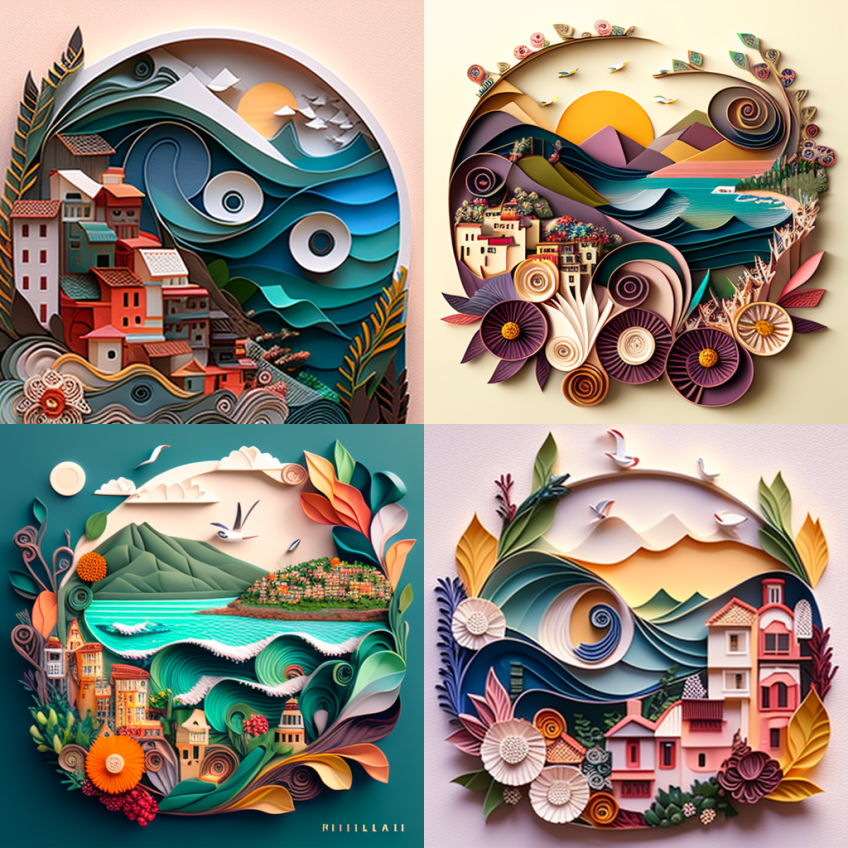
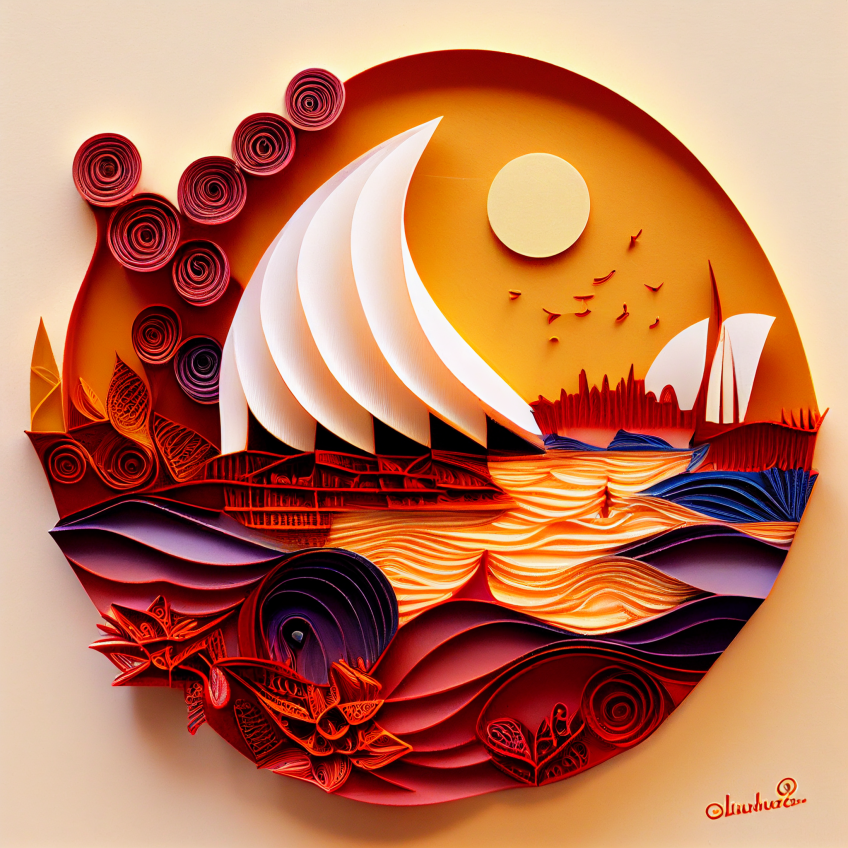
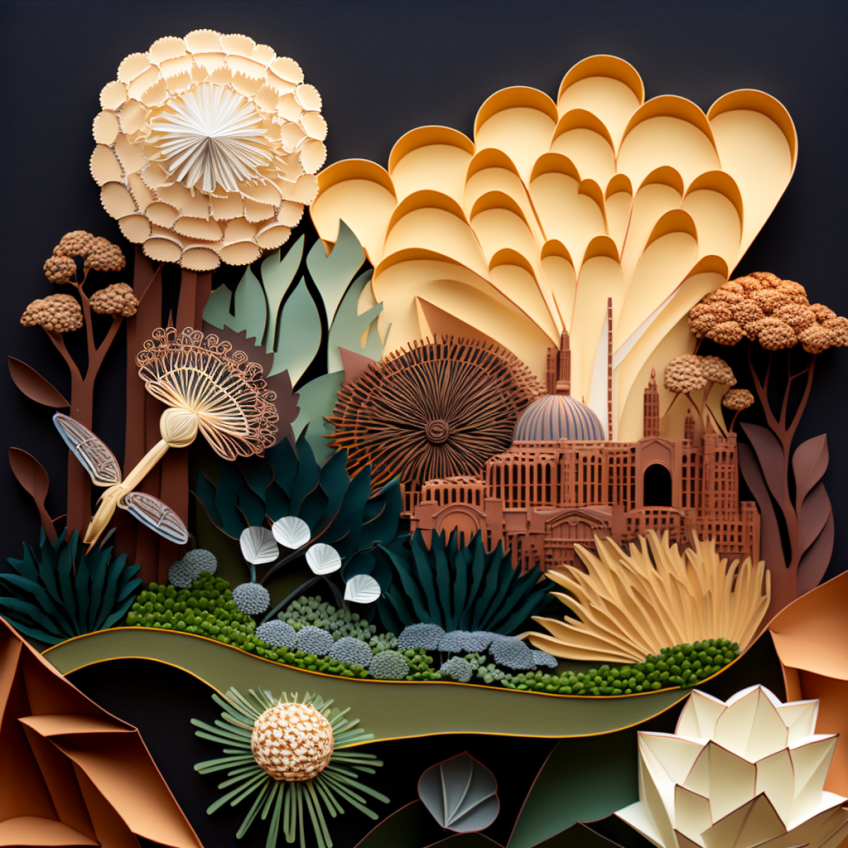
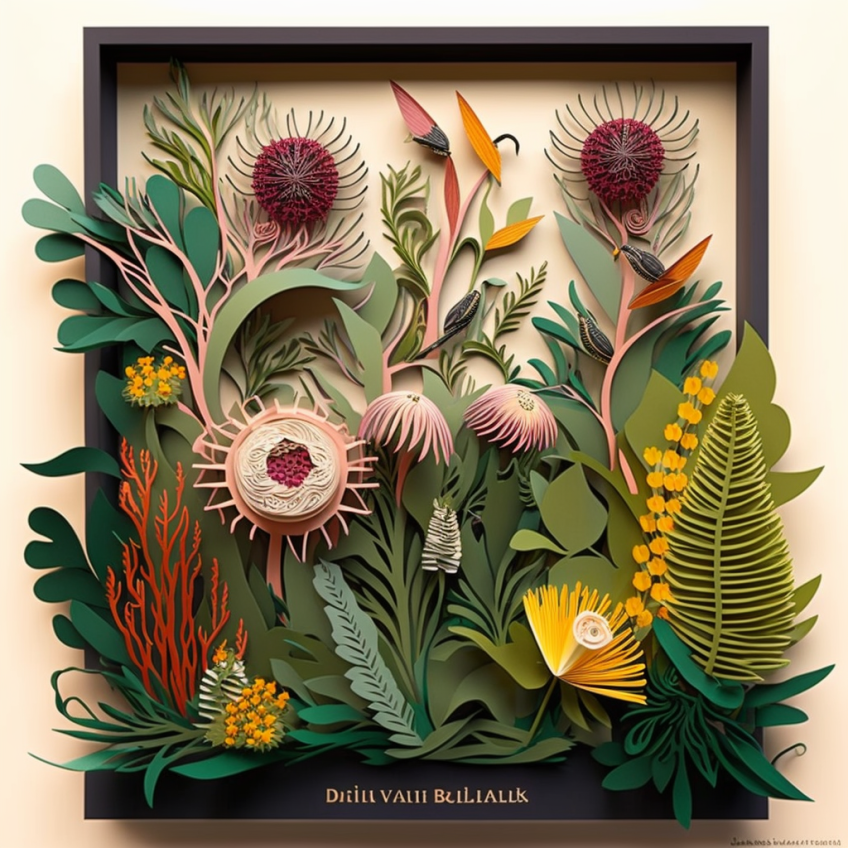
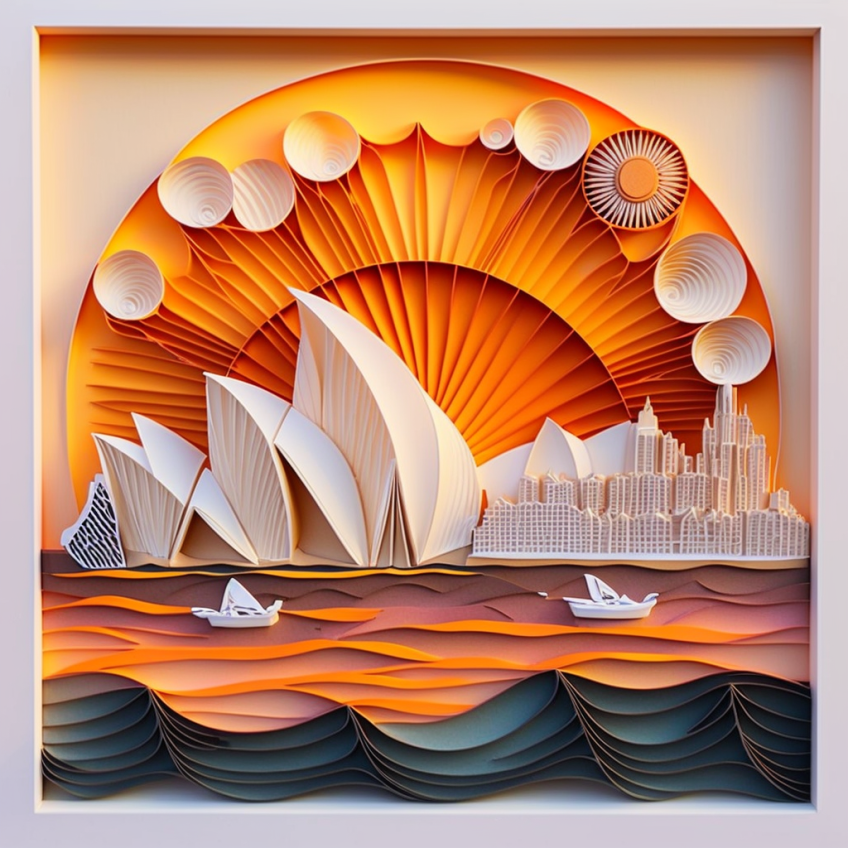
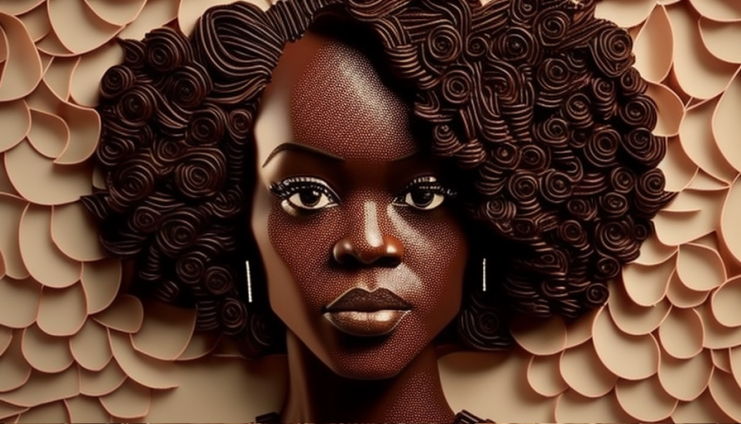
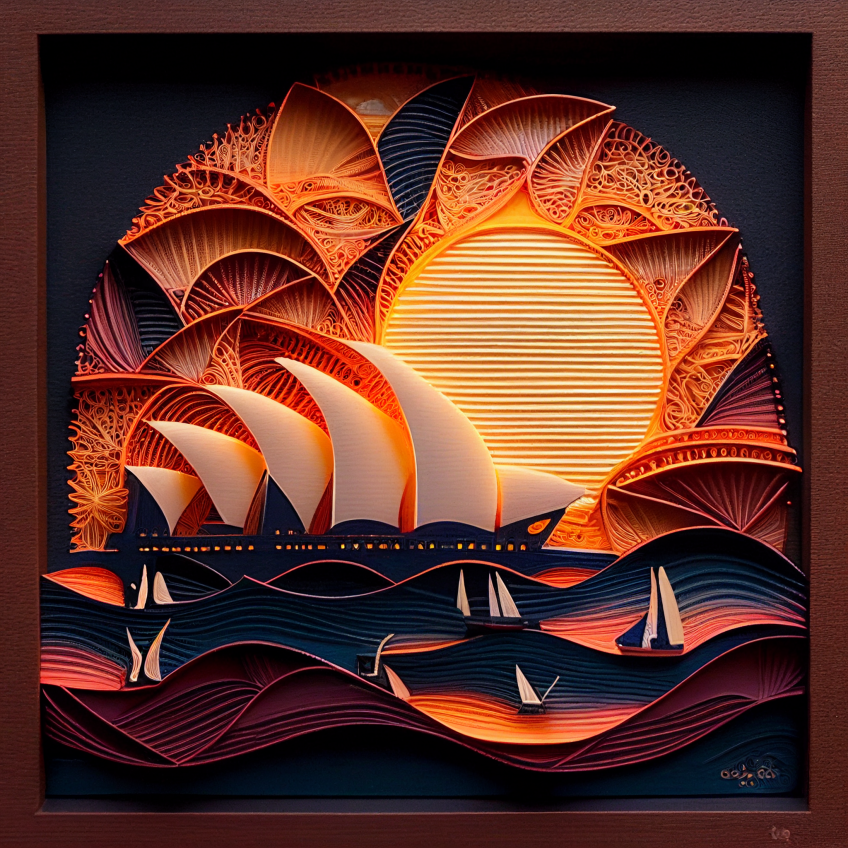

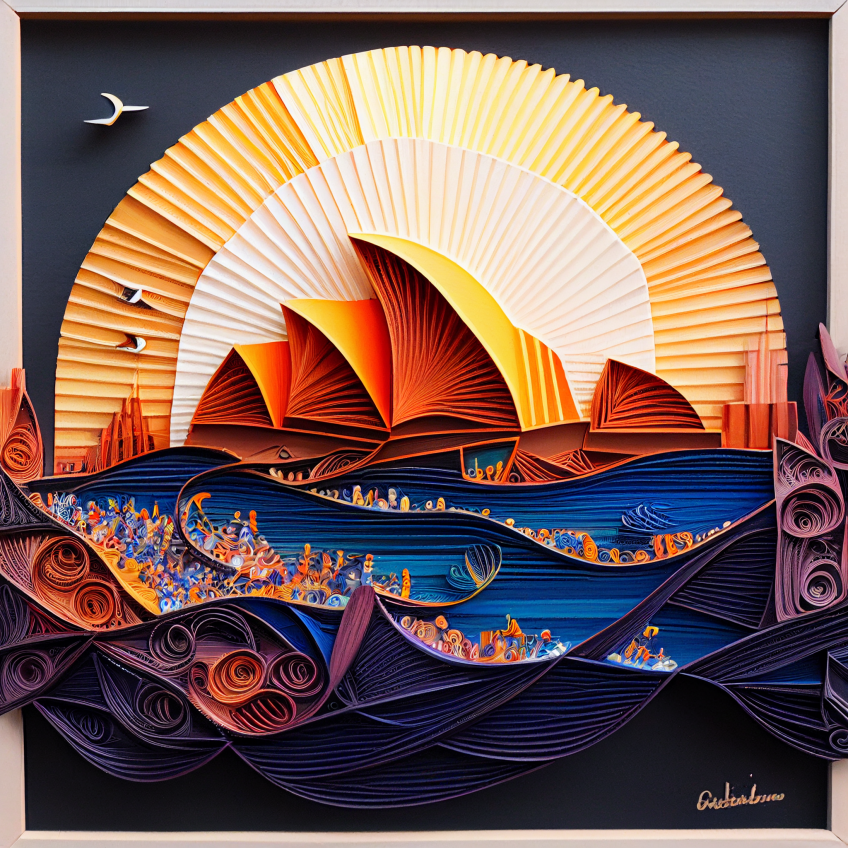
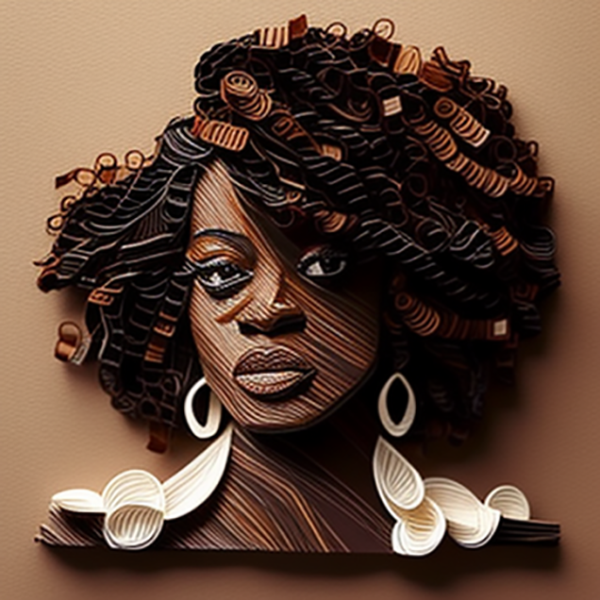
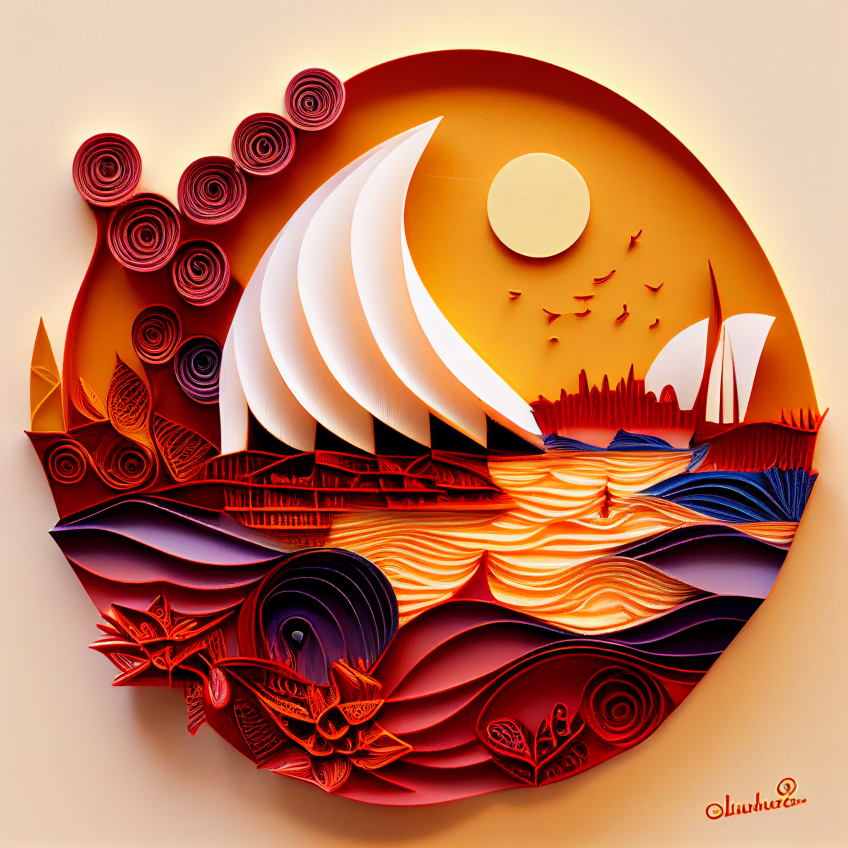
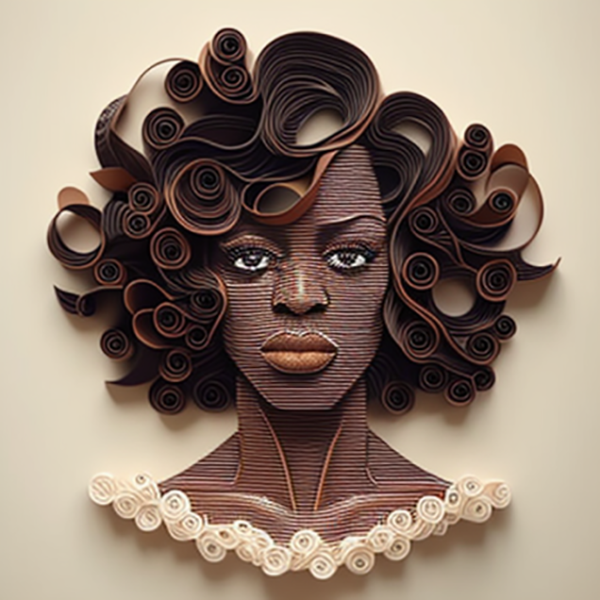
Some of the images above look similar to the work of acclaimed paper artist (which does not make some artist happy), while others would question whether the piece should be classified as quilling.
I recognize this approach to computational creativity raises a lot of questions that are being debated amongst artist as well as programmers. Can an intelligent agent truly be creative? If you recreate the piece in a different modality, can you really call it original artwork?
I can only speak for myself. The irony is not lost on me that using this tool helps me to create in an art form that is not normally associated with high tech processes. One of the beautiful things about quilling is how minimal it is in terms of access and creation. AI quilling does not replace some of the benefits of quilling (improved dexterity and fine motor skills). Also, while it is easy to create an initial piece in AI, it takes time and patience to customize a digital piece using these digital tools or other photo-editing tools. I will keep learning more about how these tools work through experimentation. This doesn’t mean that I will rely on AI to produce an idea for me. It just means on the days when I am in a creative rut, I have another way to break that block. I am interested in your thoughts. Let me know what you think about this below.
Turn to the Arts
From Happify Daily

In times of distress, reaching for those watercolor paints or the guitar collecting dust in your closet may not be your first instinct. But the arts—visual, performing, creative writing, or even movement-based creative expression—may have a profound healing effect in difficult moments like these.
In fact, research suggests that creating art may reduce cortisol, the body’s stress hormone, and lead to a more positive mental state. Even if you aren’t feeling particularly creative, try to carve out some time where you can draw, paint, sing, or simply watch a performance that sparks joy or wonder…
Quilling is one of the most relaxing art forms. Students in our classes have reported that the act of quilling helps them destress from daily work pressure, and provides a sense of pleasure, peace and self-satisfaction by creating something beautiful.
Contact us for more information on how to schedule a class

Quilling Art, Craft, or Both…
quilling art, craft, or both?
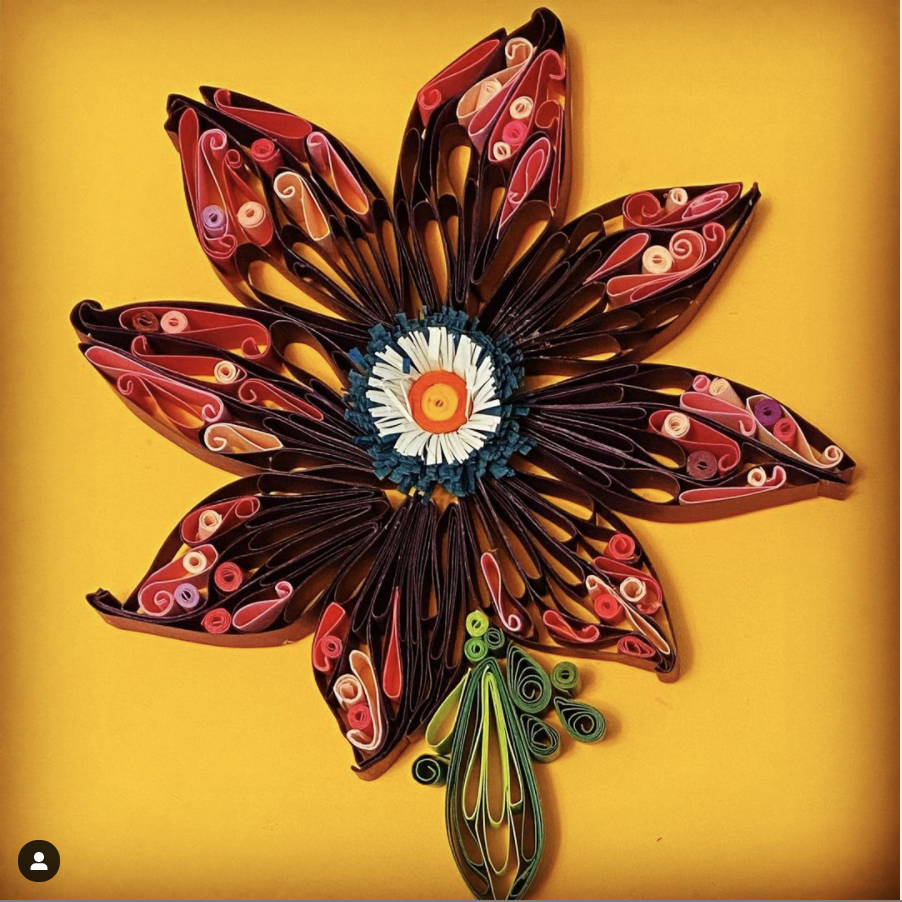
Someone asked me if the classes I teach were Arts and Crafts or Arts OR Craft.
Good question!
It was a question that made me do a bit of research.
If you know me, I love to get the right answer, but readily admit when I don’t know if my answer is correct. I did some searching and found a site that offered a direct comparison.
I took some time to find a succinct answer that describes the difference between the two. I appreciated this definition: Art is described as an unstructured and open-ended form of work; that expresses emotions, feelings, and vision. Craft denotes a form of work, involving the creation of physical objects, by the use of hands and brain.
In my classes, you learn both art and craft. I will show you the (craft) foundations of quilling; how to make the basic shapes, and if you so choose, to make them uniform and replicable. But the items do not have to be replicable. You are welcome to take what you learn and create a unique image that can’t easily be duplicated (art).
Resource for All Hobby and Crafting Enthusiasts…(including Quillers).
Resources for locating quilling templates and tutorials
As I mentioned a couple of weeks ago, I was extremely excited when I started quilling. Immediately I wanted to find all of the resources out there to help me learn how to be a better quiller. Over the next few weeks I will write about resources. The first resource I share, however, will be beneficial for crafters in general. While looking up resources, I found a database dedicated to crafting. According to EBSCO Industry, the company that curates the database, The Hobbies & Crafts Reference Center is a full text database accessible via a custom EBSCO interface designed primarily for use in public libraries. Content in the database includes a collection of core, proprietary articles covering over 140 topics, as well as licensed periodicals, books and video that focus on categories commonly referred to as hobbies and crafts and is available in high-quality PDF format. Features include the ability to search the Hobbies & Crafts interface by category, view all available topics and browse popular resources related to the area of Hobbies & Crafts. Quilling is still gaining in popularity, but I was able to find dozens of tutorials available for download on the site. For hobbies that are more popular such as Beer and Wine Making for example, you get an organized collection of resources that includes links for the various types of information you might want about the topic. If your library does not have this resource, you can talk to your librarian and request they consider purchasing access to it.

Screenshot from The Hobbies & Crafts Reference Center that focuses on Beer and Wine Making

History of Quilling
The history isn’t very long, but provides you with insights on how and why quilling became popular with the rise of paper.
The history isn’t very long, but provides you with insights on how and why quilling became popular with the rise of paper. Most places that have written about the history of quilling (which I will link to throughout this article), say quilling began as a craft sometime around the 15th century. The North American Quilling Guild believes quilling could have started a few centuries earlier. For example, Spruce Crafts believes it may have started in the 13th century in China, around the time paper was invented.
My Modern Met shares, “it is believed to have been created by French and Italian nuns and used to decorate religious objects in an effort to save money. The filigree was fashioned to simulate carved ivory and wrought iron—two very costly details”. Relatedly, nuns sometimes used gold-gilded paper(trimmed from the edges of books) to make the decorations look like metal. Spruce Crafts reveals quilling resurged in popularity in the 18th century as a "suitable" pastime for the women of the aristocracy. While Quilled Creations explains that this art form was popular in the American colonies. “However, based on the lack of historical samples, quilling seems to have lost its popularity during the late 1800's”.
My guess for the reason the history is so spotty and not many products exists from previous centuries is due to the malleability of paper. This quality of paper is great for quilling, because it can be shaped in so many ways, and inexpensive. However, this feature makes paper products easy to destroy if not handled properly. Today we have more resources to protect work from damage, such as sealing it with a glaze. Alas, this may be why there are not many older examples of quilled pieces of work made from paper. Quilled Wonderland has collected the stories of a few older pieces that survived the times.
Aside: You may notice that the phrase paper ‘filigree’ pops up a lot when exploring the history of quilling. Filigree is decorative or ornamental metal work. The metal flower, as well as the embellish found within the larger petals pictured is similar to shapes and patterns that can be quilled with paper.

Gold filigree intricate work from Portugal. Photo by Ss.analuisa - Own work, CC BY-SA 4.0, https://commons.wikimedia.org/w/index.php?curid=47816424

Quilled paper flowers by All My Quills.

How I Started Quilling
Here is some inspiration on how to get started quilling.
Hi All,
I figured I would share a little bit of encouragement about quilling. The first picture is the first item I quilled. I call it “Joy”. Just kidding. It’s really a collection of shapes that I later realized could be rearranged to make flowers.
When I started quilling it was quite by accident. I was learning how to make greeting cards through various YouTube channels when I stumbled upon a card that was quilled. I thought it was beautiful. I watched the video, learned it was quilling, and looked up what it meant to “quill”. During that search, I learned about Yulia Brodskaya and that was it! I was hooked. I went to work… and created what you see here.
It was okay for a beginner, but nothing close to Yulia’s work (which is not really quilling, but paper art). However, that is okay. You have to learn how to walk before you can run. The first picture illustrates me walking. The second picture (not even two years later; inspired by the Disney Princess, Tiana) shows me moving a bit faster. I am still learning how to run (one day with scissors)! I am a life long learner.
If you stick with this blog, I will take you on my quilling journey, and show you what I know as I go along. The beautiful thing about quilling is that it is really a community activity. Everyone I have met on this quilling journey has been pretty supportive, and wants to teach others, (so we others with whom we can quill ).
My goal is to post once per week. (Maybe more when time allows). My post will always have something to do with quilling or paper arts and crafts. I will share what I am working on, what I am learning, what I reading or watching (as it relates to paper crafts). Feel free to ask questions or share your work! I would love to see what you are quilling, as well as get feedback on my creations.
Well, thank you for your time. I have a few minutes left in the day…just enough time to roll a few more circles before I get ready for tomorrow. Be well friends… and don’t forget to take some time to chill and quill.
This is the first picture. The picture is comprised of various quilling shapes that have been placed together as flowers, as well as paper hearts.

This quilled picture was inspired by the Disney Princess, Tiana. It is a portrait picture of Tiana in her gown (waist up). She has her her head resting in one hand and is looking up.